
Is This Perimenopause… or Am I Losing My Mind?
- Catie Chung PhD RN

- Dec 23, 2025
- 4 min read
Updated: Jan 10
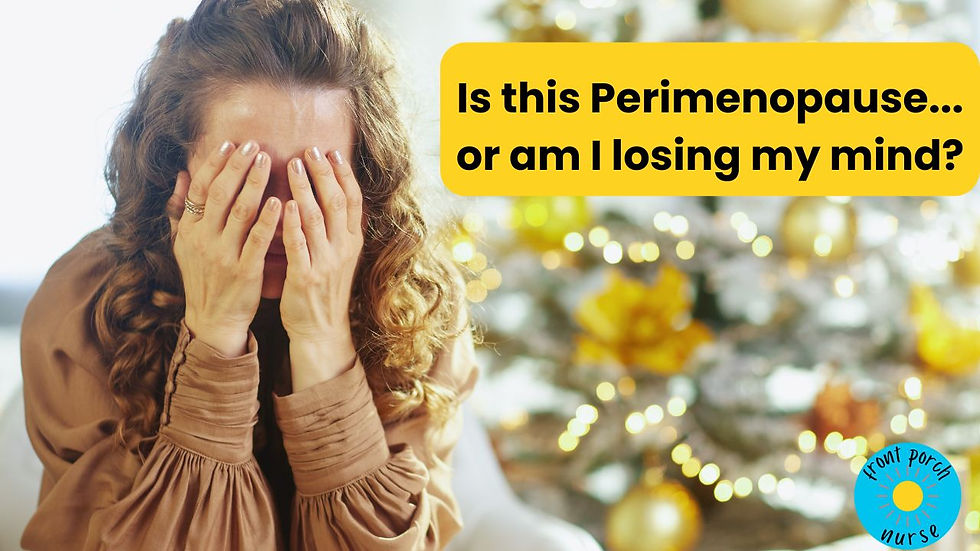
You’re exhausted.
Your sleep is trash.
Your emotions feel unpredictable.
Your body feels unfamiliar.
And somewhere between forgetting why you walked into the kitchen and crying because the dishwasher beeped too loudly, you start wondering:
Is this perimenopause… or am I actually losing my mind?
Let me say this clearly, right up front:
👉 You are not broken. You are not weak. And you are not losing your mind.
What you’re experiencing is incredibly common — and incredibly under-explained.
Why Perimenopause Feels So Confusing (and So Personal)
Perimenopause isn’t a single moment or diagnosis. It’s a transition, often lasting 7–10 years, where hormone levels fluctuate — sometimes wildly — before menopause officially arrives.
And unlike menopause (which gets a birthday candle at 12 months without a period), perimenopause is sneaky.
It doesn’t knock politely.It seeps in sideways.And it often looks like… everything else.
That’s why so many women get told:
“It’s just stress.”
“You’re depressed.”
“Welcome to aging.”
“Try harder to relax.”
(Insert deep, knowing eye roll here.)
Common Early Signs of Perimenopause (That No One Warned You About)
Most women expect hot flashes and missed periods.
What they don’t expect are symptoms that feel neurological, emotional, or existential.
Here are some of the most common early perimenopause symptoms I hear about as a nurse:
Sleep problems (especially waking between 2–4am)
Anxiety or sudden mood swings
Increased irritability or ragey moments
Brain fog and word-finding issues
Fatigue that doesn’t improve with rest
Heavier, shorter, longer, or unpredictable periods
New or worsening PMS
Heart palpitations
Joint aches or body stiffness
Decreased stress tolerance (“I used to handle this just fine!”)
Sound familiar?
That’s not a personality flaw.That’s a hormone + nervous system issue.
“But I’m Only 38 / 41 / 44 — Isn’t That Too Young?”
Nope. Sorry sis.
Perimenopause can start as early as the late 30s, especially in women who:
Carry a heavy invisible load
Have chronic stress histories
Are caregivers (kids, parents, everyone)
Have autoimmune conditions
Have experienced trauma or prolonged burnout
Your birth certificate doesn’t get the final vote here.
Why Perimenopause Messes With Your Nervous System
Here’s the part most women are never taught:
Estrogen doesn’t just affect periods.
It affects:
Brain chemistry
Stress response
Sleep regulation
Temperature control
Muscle recovery
Mood stability
When estrogen fluctuates, your nervous system loses its usual buffer.
So the things you used to tolerate? They now feel overwhelming.
That’s why perimenopause often shows up as:
Anxiety
Emotional reactivity
Feeling “on edge”
Low resilience
This is not weakness. This is physiology.
Is It Perimenopause… or Something Else?
Here’s where it gets tricky — because perimenopause can overlap with other issues.
It can look like:
Thyroid dysfunction
Iron deficiency
Depression or anxiety disorders
Sleep apnea
Blood sugar dysregulation
Chronic stress or burnout
That’s why a good evaluation matters.
Not to pathologize you — but to rule things out and get the full picture.
What You Can Do Right Now (Without Overhauling Your Life)
Before we talk hormones or prescriptions, let’s start with ground-level support.
1. Start Tracking Patterns (Not Perfection)
Keep notes about your:
Sleep quality
Cycle changes
Mood shifts
Energy levels
Patterns > isolated bad days.
2. Prioritize Sleep Like It’s Healthcare (Because It Is)
Sleep disruption worsens everything in perimenopause:
Mood
Brain fog
Weight changes
Anxiety
Tiny changes matter here — consistent bedtimes, reducing late-night stimulation, protecting your wind-down time.
3. Eat to Stabilize Blood Sugar
Skipping meals or under-eating increases:
Anxiety
Night wakings
Energy crashes
Protein, fiber, and regular meals are not “diet rules” — they’re nervous system support.
4. Reduce Stress Inputs Where You Can
This isn’t about bubble baths.
It’s about:
Closing mental tabs
Saying no to unnecessary obligations
Recognizing that chronic stress is a health issue, not a character flaw
When to Talk to a Clinician
You don’t need to suffer quietly.
Consider reaching out if:
Symptoms are affecting work or relationships
Sleep is consistently disrupted
Anxiety or mood changes feel unmanageable
Period changes are extreme or concerning
And if you’re dismissed?
That’s not the end of the road — it’s a signal to seek better support.
The Big Reframe
Perimenopause isn’t you falling apart.
It’s your body asking for a new operating system.
One that:
Respects your nervous system
Prioritizes healthspan over hustle
Recognizes that caring for yourself is not indulgent — it’s essential
You’re not losing your mind.
You’re waking up to a new phase of your life — and you deserve real information, not gaslighting.
If this post made you feel seen — stay close. Sign up for my email list here.
This is exactly the work I do: helping midlife women understand what’s happening in their bodies, calm the nervous system, and protect their healthspan without guilt or overwhelm.
Keep breathing. You’re not alone. And no — you’re not losing your mind! 🧡
FAQs
What are the first signs of perimenopause?
Early signs often include sleep disruption, mood swings, anxiety, irregular periods, fatigue, and brain fog. These symptoms can start years before menopause.
How do I know if it’s perimenopause or stress?
Perimenopause and stress often overlap. Tracking symptoms over time and evaluating sleep, cycles, and stress patterns can help clarify what’s happening.
Can perimenopause cause anxiety?
Yes. Hormonal fluctuations — especially estrogen — affect neurotransmitters and the nervous system, making anxiety a common perimenopause symptom.
What age does perimenopause start?
Perimenopause can begin in the late 30s or early 40s, though timing varies widely.
Should I see a doctor for perimenopause symptoms?
Yes, especially if symptoms interfere with daily life. A knowledgeable clinician can help rule out other conditions and discuss supportive options.
Let's keep learning together! Sign up for my email list ➡️ https://sendfox.com/frontporchnurse


